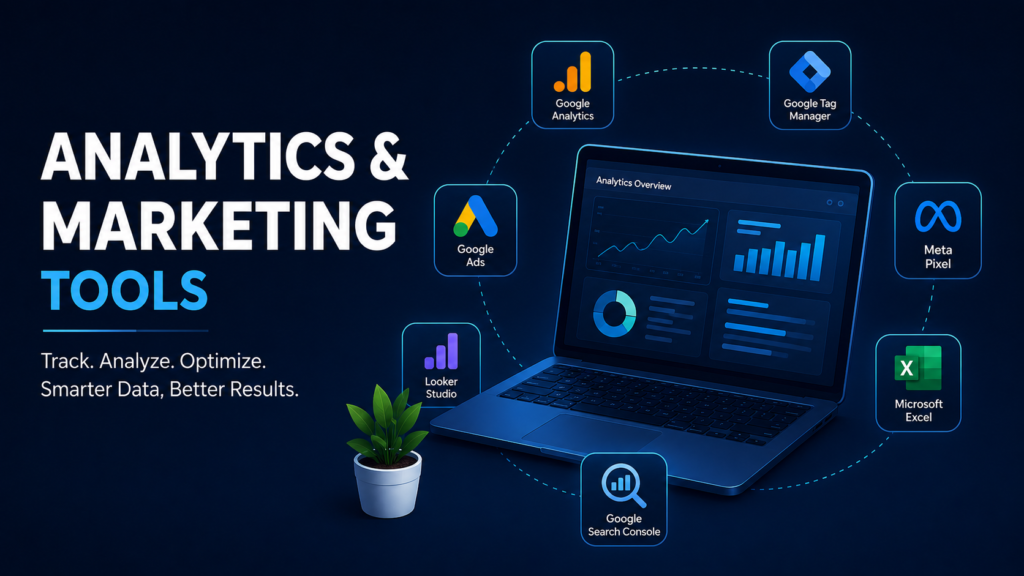
Analytics and marketing tools help businesses track website performance, understand visitors, measure campaigns, and make better marketing decisions using real data.
They help you understand what is working, where visitors come from, how users behave, and which marketing activities need improvement.
Common tools include Google Analytics, Google Ads, Google Tag Manager, Meta Pixel, Looker Studio, and Google Sheets, depending on project requirements.
Google Analytics helps measure website traffic, user behavior, engagement, conversions, traffic sources, and other useful website performance data.
Yes. Analytics tracking can be set up and checked so important website activity and relevant events can be measured correctly.
Google Tag Manager helps manage tracking tags and related scripts without editing website code every time.
Yes. Google Tag Manager can be configured with suitable tags, triggers, variables, and tracking requirements.
Conversion tracking measures valuable actions such as form submissions, purchases, calls, sign-ups, or other actions that matter to your business.
Yes. Relevant conversion events can be planned, configured, tested, and monitored using suitable analytics and advertising platforms.
Google Ads tracking helps measure actions and results generated from advertising campaigns so campaign performance can be evaluated.
Yes. Google Ads conversion tracking can be configured for relevant actions such as leads, purchases, sign-ups, or other valuable customer actions.
Meta Pixel is a website measurement tool that can help track visitor actions and understand the effectiveness of Meta advertising campaigns.
Yes. Meta Pixel and relevant events can be configured and tested according to website and campaign tracking requirements.
Looker Studio is a reporting and visualization tool that can turn data from connected sources into dashboards and easy-to-understand reports.
Yes. Custom dashboards can bring important metrics into one place, making it easier to monitor traffic, campaigns, leads, conversions, and performance.
Yes. Reports can summarize important performance metrics, campaign results, trends, conversions, and areas that may need improvement.
Data-driven marketing uses measurable information and performance insights to guide campaign planning, optimization, and marketing decisions.
Yes. Analytics can reveal which channels, campaigns, pages, and actions are performing well and where improvements may be needed.
Yes. Website traffic can be reviewed by sources, pages, users, engagement, devices, and other available metrics to identify useful trends.
Yes. Lead actions such as form submissions and other agreed conversion events can be tracked using appropriate measurement tools.
Yes. Important interactions such as button clicks, form submissions, downloads, and other events can be tracked when the required setup supports them.
Depending on the data source and workflow, marketing data can be organized in Google Sheets for analysis, reporting, and easier data management.
The ideal frequency depends on campaign activity and business goals. Active campaigns may benefit from frequent monitoring, while regular reporting provides a broader view of trends.
By measuring campaign and conversion performance, you can identify weaker areas and make more informed decisions about where marketing resources should be focused.
Yes. Ongoing support can include tracking checks, performance analysis, dashboard updates, reporting, and recommendations based on available data.
Cookie Consent
We use cookies to improve your experience on our site. By using our site, you consent to cookies.